

How to Protect Your Best People (Before Burnout Starts)
High performers rarely burn out because they lack capability or commitment.
They burn out because they quietly absorb more and more.
More requests.
More responsibility.
More invisible work.
And because they’re reliable, leaders often don’t notice the load building until strain is already there.
I see this pattern regularly in my work with high-performing teams.
In response to my recent Two-Minute Tip on why reliable people burn out, a leader emailed me an incredibly thoughtful follow-up: How do we actually assess capacity and make it visible before overload happens?
It’s a great question. And like many important questions, the answer is less complicated than we think.
One of the most effective ways to prevent this isn’t a big program or new system.
It’s a simple, structured conversation held consistently.
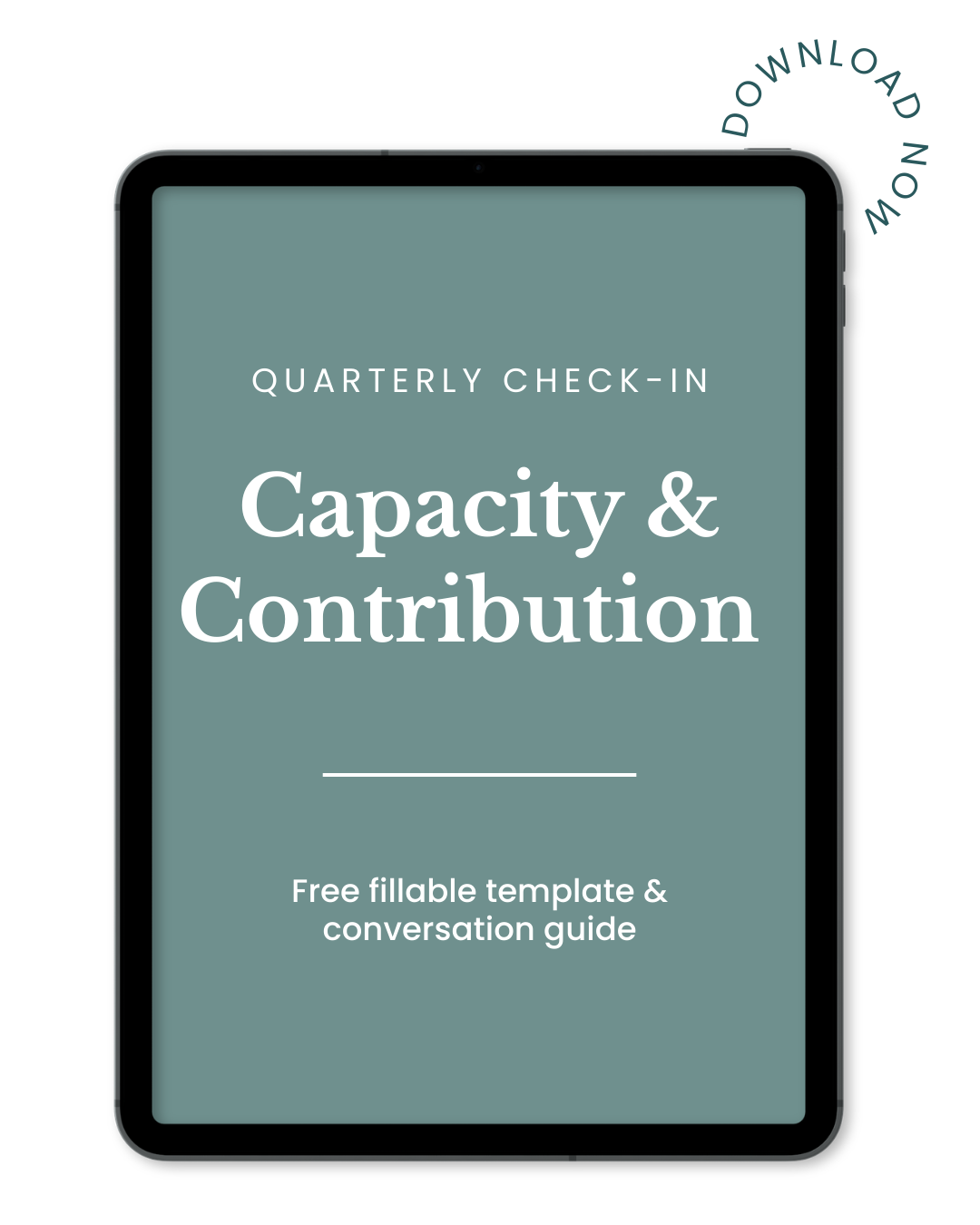
I created a practical template to help: the Quarterly Capacity & Contribution Check-In.
Why This Conversation Matters
In most organizations, managers and employees talk about:
Performance
Projects
Goals
But they rarely pause to align on the things that determine long-term sustainability:
What someone is contributing
How full their workload really is
Whether they’re focused on the right work
How they’re growing
When those drift out of alignment, two common patterns emerge:
High contribution + high load → burnout risk
Strong performance + low growth → stagnation
A quarterly check-in creates space to notice and adjust early (before problems compound).
What This Check-In Helps Leaders Do
This conversation helps managers and employees:
Make invisible work visible
Calibrate workload realistically
Reconfirm top priorities
Protect focus on highest-impact work
Identify growth opportunities
Agree on what to stop, pause, or delegate
In other words: align expectations with reality.
How to Use It
Once per quarter:
The manager and employee each complete their reflection prompts independently
Meet for a focused 45–60 minute conversation
Confirm priorities, workload adjustments, and one growth focus
That’s it. A simple conversation that interrupts hidden overload and feelings of frustration, so both parties can step into the next quarter feeling reenergized and aligned.
The Goal
The goal isn’t evaluation.
It’s alignment.
When leaders and employees regularly realign on contribution, capacity, focus, and growth, reliable people stay energized, priorities stay clear, and work stays sustainable.
And that’s one of the most practical ways to protect your best people.