

Your Best People Are Burning Out for This Reason
What does my chocolate lab and your highest-performing employee have in common?
More than you might think.
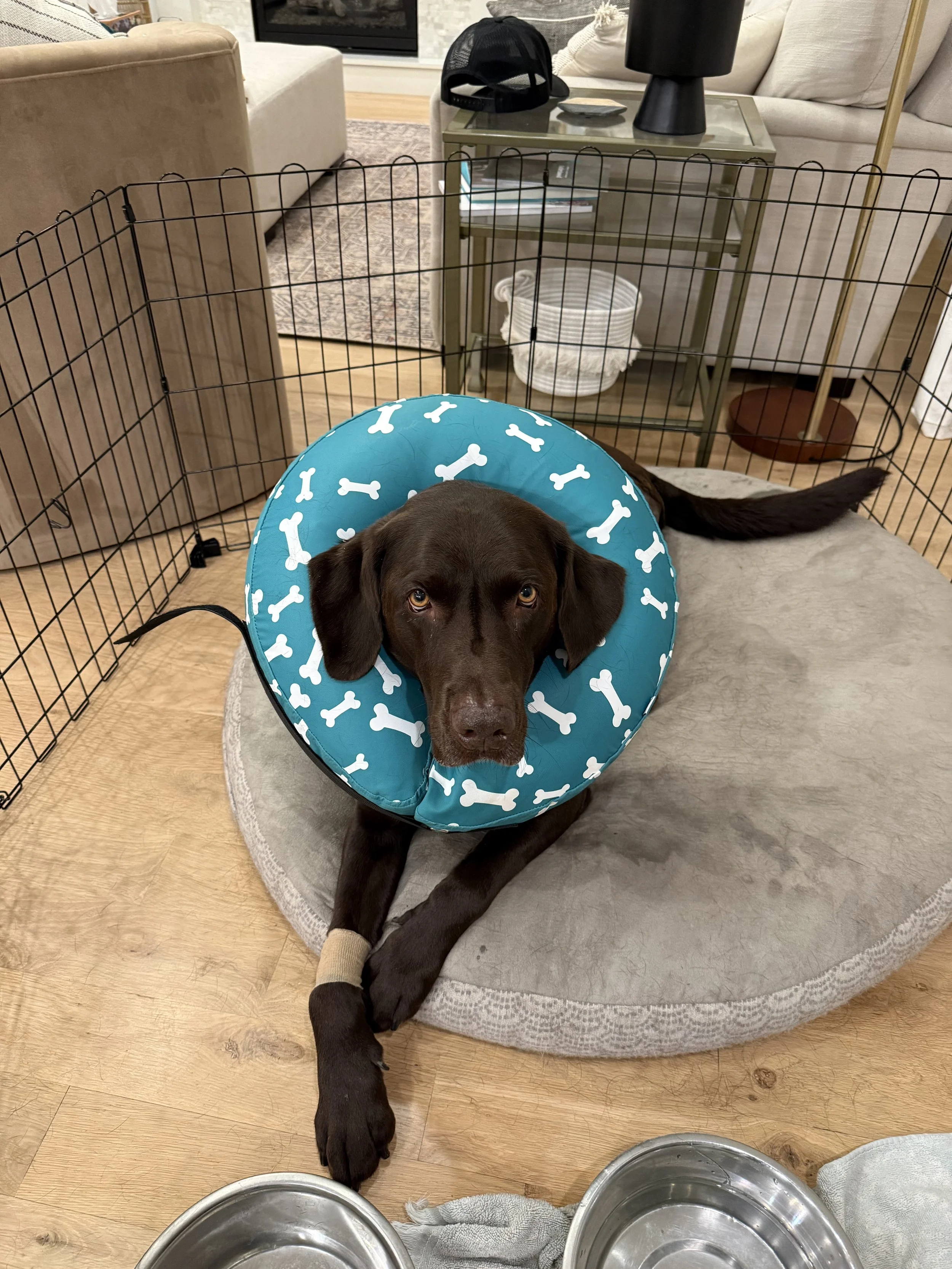
A few weeks, we learned our pup had torn his ACL and needed surgery. We almost missed it because he kept bouncing back, staying joyful, and acting like everything was fine (typical Lab!).
And that's where this turns into a leadership lesson.
Leaders rarely intend to overload their best people. More often, it happens quietly… one extra request at a time. High performers are reliable. They step up. They don’t complain. And because they can handle more, leaders naturally turn to them again and again.
Over time, that pattern wears even the strongest contributors down. Burnout sets in. Frustration grows. And resentment can quietly build toward colleagues who aren’t carrying the same weight.
In this Two-Minute Tip, I share why reliability needs to be protected—not punished—and what leaders can do to notice this pattern early and create more sustainable teams.
Post-Surgery Recovery
Sweet guy ended up kind of liking his “airplane pillow” cone :)
-
We encountered quite the surprise before Christmas when we took our chocolate lab in to the vet because he kept limping from time to time to find out that he needs a $5,000 surgery because he tore his ACL.
We were shocked because, if you know labs, they continue to be full of joy. They bounce back, they keep going no matter what. And so sure, he'd limp a little bit after fetch, but then he would act like he was ready for another run so soon after.
Poor guy looked okay, and we just didn't realize how much was going on beneath the surface.
Of course, this got me thinking about leadership and this is exactly what happens with high performers on your team.
They're reliable. They step up. They don't complain. So naturally the leader continues to give them more and more work, and they keep pushing through with a smile on their face.
But over time, this can come at a cost.
Those same high performers can start to get worn down. They can feel stretched thin. And they can start to feel some bitterness toward other colleagues, maybe lower performers on the team who aren't getting as much work, and they feel like they're just carrying all the weight.
So two things here. If you are in a leadership role and you have one of these high performers, it is your responsibility to monitor how they're doing and how much work you are piling on them. Pause right now and think about what's on their plate, make sure that it's not too much. Maybe pull things back or spread the load a little bit.
And if you are one of the high performers who continues to smile and act like everything's fine, even though you've torn your ACL, I want you to raise your hand and speak up and share how you are really doing with your boss.
At the end of the day. The best people on your team don't burn out from weakness or an inability to do the work. They burn out because they are relied on too much. Leaders, it is your responsibility to protect that reliability and not punish it.